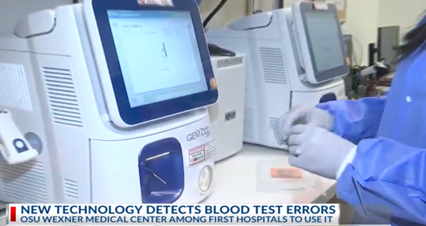
In the emergency department, making decisions quickly is of critical importance. However, up to 18.1%1,2 of blood samples tested in the ED are hemolyzed. Ohio State University, Wexner Medical Center, is among the first in the country to utilize a new innovation that detects hemolysis in just 45 seconds3, helping their team ensure patients receive the best possible care.
Implementing Groundbreaking Testing
Dr. Heather Stieglitz, Co-Director of Clinical Chemistry and Toxicology at OSU’s Wexner Medical Center, has long been aware of hemolysis as a potential issue with blood samples. Now, the medical center is utilizing groundbreaking blood gas testing that detects hemolysis at the point of care, for the first time ever. Hemolysis, which can impact the accuracy of potassium results, used to require up to an hour to detect. Now, by eliminating the need to send samples to the lab for hemolysis detection, patient management decisions can be made more quickly and accurately, which is especially important in high-pressure, acute care settings, like OSU’s Emergency Department.
I’m very lucky to work at Ohio State, one of the first places in the country to use this type of blood gas analyzer”
- Dr. Robert Cooper, Clinical Associate Professor of Emergency Medicine at Ohio State University
Robert Cooper, MD, Clinical Associate Professor of Emergency Medicine at OSU, notes an extremely positive difference in the standard of care, since implementing blood gas testing with hemolysis detection at the point of care.
“Rather than having to think ... ‘I trust that this potassium is truly high, and we didn’t hemolyze the sample,’ now you have that accurate information, and you can take a deep breath and say, ‘Okay, now I know what to do,” concluded Dr. Cooper.
Learn more by watching the full NBC4 segment.
G7K NBC4i CB WW Rev00 5.25


