In a high-stress operating room, the ability to quickly and accurately read complex hemostasis assays can make all the difference. Point-of-care viscoelastic testing, delivering actionable results in less than 15 minutes, offers an enormous time advantage over standard laboratory hemostasis tests, which often require 30-90 minutes, to guide critical decisions.1 To save critical time and improve patient outcomes, it’s essential to understand results from ROTEM viscoelastic testing systems. Continue reading below to learn more about TEMograms and ROTEM parameters.
What is a TEMogram?
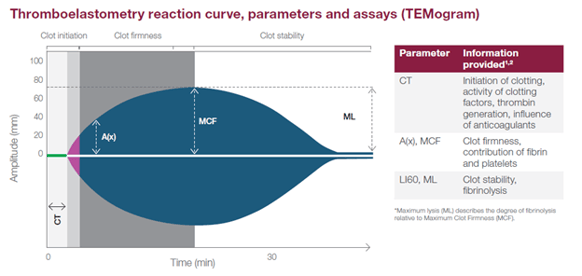 Used to assess clinically significant bleeding situations, ROTEM TEMograms are curved graphs that depict the interaction of coagulation factors and their inhibitors, blood cells, and anticoagulant drugs, during clotting and fibrinolysis. These easy-to-use tests provide clear, real-time information, helping clinicians optimize hemostasis, while minimizing blood loss and blood product exposure.
Reading TEMograms
Since guidance from TEMograms can contribute to patient management decisions, proper and correct reading of the graphed results is essential. When reviewing TEMograms, questions to consider may include: “Do the curves within the four assays appear normal visually?” “Are the numbers within the proper range?” "Are institution-specific protocols being followed?” Sequential, step-wise decision trees, based on numeric values from ROTEM systems can aid in making standardized treatment decisions, while following evidence-based best practices.2
Improving Patient Outcomes, One TEMogram at a Time
The ability to quickly and correctly read hemostasis assays supports the administration of treatment in a timely manner. TEMograms help guide clinicians in the delivery of the right hemostasis intervention at the right time, in the right sequence.
RC PBM Article H REV00 4.24


